Heaters for Tractors: Warming Up to Efficiency and Sustainability
Winter's harsh conditions significantly impact farm equipment, leading to frozen fuel lines, difficult engine starts, and increased fuel consumption. Tractor engine heaters offer a solution, promising improved efficiency and environmental sustainability. But are they the right investment for your operation? This article examines the complexities of engine heater adoption in sustainable agriculture, providing actionable intelligence for various stakeholders.
Don't let cold weather hinder your productivity. How much does inefficient engine operation cost your farm annually? For more information on tractor heater options, check out this helpful resource: Tractor Heater Options.
The Perks of Pre-Heating Your Tractor
Pre-heating a tractor engine is analogous to preheating an oven before baking. A properly warmed engine starts quicker and smoother, reducing strain on components. This translates to less wear and tear, potentially extending the engine's lifespan and reducing costly repairs. But the benefits are far more substantial. Improved fuel efficiency is a direct result of a warmer operating temperature, leading to lower fuel consumption and reduced greenhouse gas emissions. It's a win-win: cost savings coupled with environmental responsibility.
Choosing the Right Heater: It's Not All Created Equal
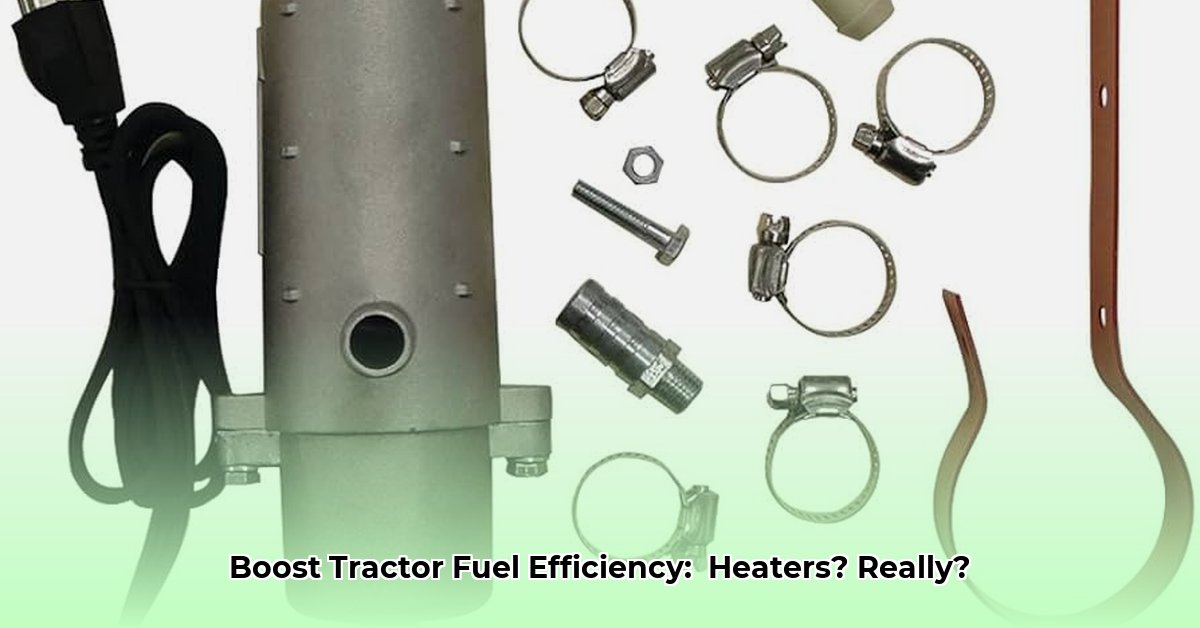
Several types of tractor heaters exist, each with unique characteristics. Circulating fluid heaters utilize a heated liquid to warm the engine block, while magnetic heaters generate heat directly within the engine block via magnetic induction. Fluid heaters often offer higher heating capacity, ideal for larger engines or extremely cold climates. Magnetic heaters, often more compact and energy-efficient, might be a better fit for smaller tractors in milder climates. The optimal choice depends on budgetary considerations, engine size, and local climatic conditions. Seeking expert advice from a qualified mechanic can greatly aid in this selection process.
How much fuel do you currently expend on cold-weather starts? Could this be significantly reduced?
The Big Picture: Sustainability and the Energy Source
While tractor heaters promise fuel efficiency and reduced emissions, their overall environmental impact is inextricably linked to their power source. If powered by fossil fuel-generated electricity, the environmental gains may be partially offset. Conversely, using renewable energy sources, like solar or wind power, significantly enhances the environmental benefits. Sustainable energy makes the tractor a truly green machine. This critical factor must be considered when assessing the overall sustainability of your operation.
Taking Action: A Step-by-Step Guide
This section provides actionable steps for various stakeholders to effectively adopt tractor heaters.
For Farmers:
- Assess Your Needs: Evaluate your typical operating conditions, frequency of cold-weather starts, and current fuel consumption to determine the viability of heater adoption.
- Evaluate Costs: Compare upfront heater costs against projected fuel savings, accounting for the heater's lifespan. A thorough cost-benefit analysis is crucial.
- Check Your Energy Source: Using renewable energy dramatically amplifies the environmental benefits of engine heaters.
- Pilot Test (If Possible): Begin with one tractor to evaluate effectiveness and cost-benefit ratio in real-world conditions before widespread deployment.
- Make an Informed Decision: Based on comprehensive analysis, determine if tractor heaters align with your farm's needs and budget.
For Equipment Manufacturers:
- Innovative Designs: Integrate efficient pre-heating systems into new tractor models to standardize their inclusion and raise consumer awareness.
- Green Technologies: Invest in R&D of more sustainable and efficient heating technologies, potentially collaborating with universities and renewable energy companies.
For Policy Makers:
- Incentivize Adoption: Implement policies like tax credits or subsidies to reduce the upfront costs for farmers and encourage adoption.
- Support Research: Fund research to thoroughly evaluate the environmental impacts of various heating methods to optimize implementation strategies.
Weighing the Pros and Cons: What to Keep in Mind
| Feature | Advantages | Disadvantages |
|---|---|---|
| Fuel Efficiency | Lower fuel consumption, resulting in direct cost savings. | Savings vary depending on heater type, external temperatures, etc. |
| Engine Lifespan | Reduced wear and tear, extending engine life and minimizing repairs. | Initial investment may be substantial; requires energy consumption |
| Environmental Impact | Reduced emissions, particularly when using renewable energy. | Environmental benefit depends heavily on the energy source. |
| Cost | Long-term cost savings through reduced fuel and maintenance. | Upfront investment, electricity costs for heater operation. |
How to Calculate the ROI of Engine Heaters for Sustainable Farming
Key Takeaways:
- Engine heaters offer significant fuel savings, directly reducing operational costs.
- Reduced emissions contribute to ecologically responsible farming practices.
- Calculating ROI requires a careful assessment of initial investments, fuel savings, and heater lifespan.
- A positive ROI indicates enhanced profitability and environmental benefits.
- Factors like climate, usage patterns, and heater type influence ROI calculations.
The decision to implement engine heaters requires a thorough cost-benefit analysis. Let's examine how to calculate the return on investment (ROI) for sustainable farming.
Understanding the Costs
Determine the initial investment, including purchase price, installation, and labor costs. Next, estimate annual operating costs, such as electricity consumption for electric heaters. A detailed cost analysis ensures accurate ROI calculation.
Calculating the Savings
Quantify the benefits. Engine heaters reduce fuel consumed during cold starts. Estimate annual fuel savings based on current usage and heater efficiency. Incorporate reduced maintenance costs due to less engine wear and tear into the calculation.
The ROI Calculation
The ROI formula is: (Total Savings - Total Costs) / Total Costs * 100 = ROI. Use projected annual savings and initial investment to determine the percentage return on investment. A positive ROI indicates financial viability.
A Step-by-Step Guide
- Gather Data: Collect information on current fuel consumption, maintenance records, and local electricity prices.
- Estimate Savings: Project reduced fuel consumption and maintenance costs with a heater.
- Calculate Total Costs: Sum the heater's purchase price, installation, and annual operating costs.
- Calculate Total Savings: Sum projected annual savings in fuel and maintenance.
- Apply the ROI Formula: Use the formula above to determine your ROI.
- Analyze the Results: A positive ROI suggests a sound financial investment. Determine the payback period (initial cost / annual savings).
Factors Affecting ROI
Various factors influence ROI. Extreme cold climates yield greater fuel savings than milder ones. Frequent tractor use increases return on investment. The heater's energy efficiency and lifespan significantly impact ROI. Different heater types have varying price points and operating costs.
Pros and Cons of Engine Heaters
| Advantage | Disadvantage |
|---|---|
| Reduced fuel consumption | Significant initial cost |
| Lower engine wear and tear | Electricity costs (if applicable) |
| Extended engine lifespan | Potential installation complexities |
| Environmental benefits (reduced emissions) | Requires regular maintenance |
Accurate ROI calculation requires diligent data collection and realistic projections. A thorough cost-benefit analysis is crucial for informed decision-making.